
As a premier contract manufacturer with over 30+ years of cosmetic engineering expertise, MYT Cosmetics (BMK Healthcare) delivers turnkey OEM/ODM solutions. Below is our featured export catalog optimized for retail brand expansion across Japan and global markets.
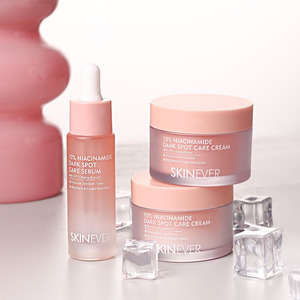
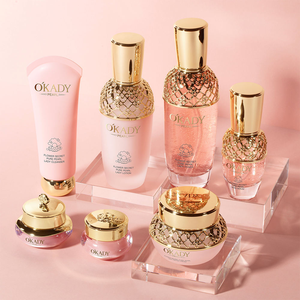
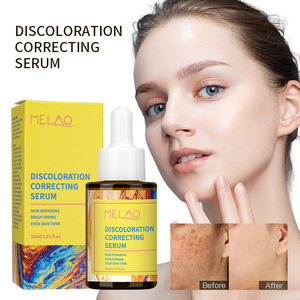
The Japanese skincare ecosystem, renowned globally as J-Beauty, represents one of the most sophisticated consumer markets for hyper-targeted, scientifically backed topical treatments. Within this market, Vitamin C (L-Ascorbic Acid and its advanced derivatives) occupies a dominant share in the preventive brightening, pore-refining, and anti-photoaging categories. Japanese consumers demand minimalist yet highly efficacious formulations that align with the cultural standard of Mochi-Hada (soft, plump, translucent skin).
To successfully export and commercialize private-label Vitamin C serums in Japan, brand owners and retail distributors must navigate a dual regulatory pathways managed by the Pharmaceuticals and Medical Devices Agency (PMDA) under the Ministry of Health, Labour and Welfare (MHLW):
Standard topical Vitamin C serums registered as cosmetics focus on moisturizing, skin conditioning, and anti-oxidative surface shield functions. Requires full ingredient labeling (全成分表示) in accordance with INCI and PMDA guidelines, allowing fast-track market entry.
Products making explicit claims regarding Bihaku (preventing dark spots and freckles by suppressing melanin production) require approved active ingredients such as L-Ascorbic Acid 2-Glucoside (AA2G) or Magnesium Ascorbyl Phosphate (MAP) within pre-approved dosage ranges.
Emerging J-Beauty trends favor novel amphiphilic derivatives like APPS (Trisodium Ascorbyl Palmitate Phosphate) and 3-O-Ethyl Ascorbic Acid, which deliver deep dermal penetration without the classical redness or sting associated with acidic pure L-Ascorbic Acid.
Our manufacturing facility provides turnkey engineering for both standard cosmetic serums and specialized Quasi-Drug ready base formulas, ensuring your brand achieves full regulatory compliance, accurate packaging claims, and frictionless customs clearance into Tokyo, Yokohama, and Osaka ports.
The primary obstacle in contract manufacturing Vitamin C topical serums is the molecule's chemical fragility. Pure L-Ascorbic Acid rapidly degrades via aerobic oxidation when exposed to oxygen, ambient ultraviolet light, elevated room temperatures, and aqueous pH levels above 3.5. This oxidation yields Dehydroascorbic Acid, which further breaks down into diketogulonic acid, turning the formulation brown, lowering efficacy, and emitting an off-odor.
To solve this for Japanese market exporters, MYT Cosmetics incorporates a tri-layer stabilization architecture across our automated cleanroom production lines:
Rather than relying on isolated Vitamin C, our R&D laboratory formulates a multi-antioxidant network. By combining L-Ascorbic Acid (10%–20%) with Ferulic Acid (0.5%) and Tocopherol / Vitamin E (1.0%), we create a self-regenerating redox system. Ferulic acid neutralizes free radicals while stabilizing Tocopherol and Ascorbic acid, boosting photoprotective efficiency eightfold compared to single-active solutions.
For sensitive Japanese skin profiles, we offer high-performance derivative alternatives that maintain superior thermal and light stability:
During mass production, our vacuum emulsification tanks are purged with high-purity Nitrogen gas to displace dissolved oxygen in the aqueous phase to under 0.5 ppm. Serums are filled using high-precision automated liquid machinery under zero-oxygen headspace conditions, sealed directly into dark amber glass drop bottles or opaque airless pump dispensers with UV-blocking coatings.
Understanding how Japanese end-users integrate Vitamin C serums into daily skincare rituals is critical for private-label brand positioning. J-Beauty consumers prioritize lightweight texture, rapid absorption without greasy residue, and compatibility with multi-layer regimes.
Applied after lotion (化粧水) and before high-SPF broad-spectrum sunscreens. The serum acts as a biological antioxidant reserve, neutralizing free radicals induced by intense Tokyo UV index and urban smog before damage reaches collagen matrices.
Humid Japanese summers in regions like Kansai require targeted sebum control. Formulations blending 5% Ethyl Ascorbic Acid with Zinc PCA inhibit lipid peroxidation in pores, preventing blackhead oxidation and reducing visible pore diameter.
Used in medical-aesthetic clinics post-laser tonning or chemical peels. Gentle, fragrance-free derivatives combined with Hyaluronic Acid and Centella Asiatica (CICA) accelerate epidermic repair and prevent post-inflammatory hyperpigmentation (PIH).
MYT Cosmetics (BMK Healthcare) operates as a leading cosmetic contract manufacturing enterprise backed by nearly six decades of cumulative institutional knowledge. Our GMP-certified manufacturing infrastructure provides international brands with unmatched supply chain flexibility, rigorous quality assurance, and end-to-end operational execution.
We streamline the complex cosmetic export journey into an efficient, predictable six-stage workflow designed for speed-to-market:
In-depth discovery analyzing target market, active concentration goals, packaging preferences, MOQs, and cost-per-unit targets.
Custom formulation tailoring in our R&D lab, adjusting viscosity, skin-feel, active percentage, and antioxidant stabilization.
Iterative sample dispatch for sensory evaluation, skin absorption testing, stability verification, and challenge testing approval.
Preparation of PMDA compliance dossiers, INCI ingredient cross-checking, COA documentation, and label regulatory reviews.
Bulk vacuum emulsification, nitrogen-purged high-speed filling, hermetic sealing, and automated box packaging in cleanrooms.
Palletization, freight logistics coordination, export customs documentation, and seamless door-to-door delivery to Japan.
Here are technical and operational answers to common inquiries raised by Japanese importers, brand founders, and cosmetic distributors:
We utilize a multi-tiered preservation protocol: 1) Nitrogen gas sparging during batch formulation and filling to eliminate headspace oxygen; 2) Combination of Ferulic Acid and Tocopherol to recycle oxidized ascorbic acid molecules; 3) UV-opaque pharmaceutical amber glass bottles; and 4) Temperature-monitored shipping containers.
Yes. We manufacture formulas pre-matched to PMDA Quasi-Drug monograph standards using approved active derivatives like Ascorbyl Glucoside (AA2G). We supply complete technical dossiers, Certificate of Analysis (COA), and stability records required by your Japanese In-Country Caretaker (ACAP/MAH) for local registration.
Our standard MOQ for custom private-label serums starts at 3,000 to 5,000 units per batch for stock packaging. For fully custom molded bottles, specialized outer cartons, or unique active complexes, MOQs typically range from 10,000 units.
Our formulations undergo rigorous accelerated stability testing at 40°C and 75% relative humidity for 12 weeks (equivalent to 24 months real-time shelf life). We guarantee active retention above 90% throughout the 2-year shelf life when stored in recommended ambient conditions.
We strongly recommend 3-O-Ethyl Ascorbic Acid or APPS (Trisodium Ascorbyl Palmitate Phosphate). Unlike pure L-Ascorbic Acid which requires a low pH (<3.5) that can cause burning on sensitive skin, these derivatives function effectively at a skin-neutral pH of 5.5 to 6.5.
Absolutely. Our regulatory team cross-checks all artwork files against Japanese Cosmetic Labeling Standards, ensuring accurate INCI transliteration in Katakana/Kanji, proper manufacturer importer credits, mandatory safety warnings, and volume declarations.
Partner with an established, GMP-certified OEM/ODM factory engineered for international scale. Contact our senior cosmetic formulation directors today to request custom samples and competitive bulk pricing.