OEM Custom Label
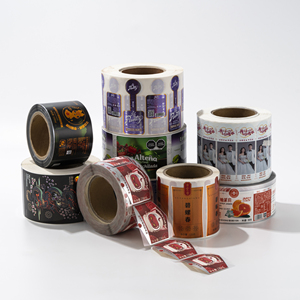
Custom Private Label Retinol Serum Packaging & Waterproof Labeling
High-precision UV-resistant roll printing for glass bottles, serum droppers, and eco-friendly primary containers.

Explore our market-ready, clinical-grade facial serums and body care solutions engineered for international brand owners, medical spas, and retail chains.
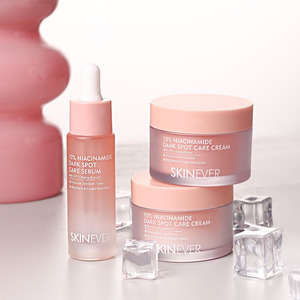
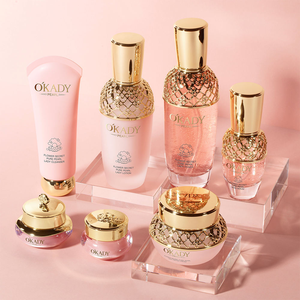
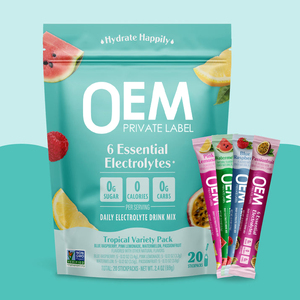
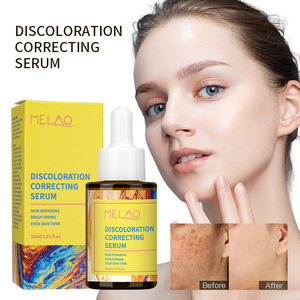
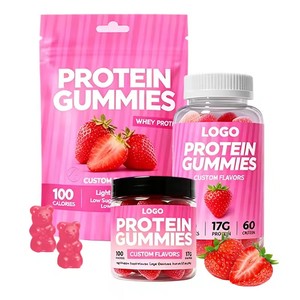
Rigorous chemical engineering, ISO-certified cleanroom environments, and complete compliance dossiers for seamless international export across 50+ countries.
The global cosmeceutical market for anti-aging retinoids is experiencing unprecedented structural growth, projected to surpass USD $2.4 Billion by 2030 with a CAGR of 7.8%. Driven by consumer demand for evidence-based dermatological ingredients, Retinol (Vitamin A1) remains the undisputed gold standard for dermal turnover, collagen type-I synthesis, and photo-damage reversal. However, for B2B brand owners, importers, and procurement directors, navigating the complex global regulatory matrix—specifically within the European Union and the United Kingdom—has become a paramount challenge.
In accordance with the Scientific Committee on Consumer Safety (SCCS) opinion SCCS/1652/23 and the updated amendments to EU Cosmetic Regulation (EC) No 1223/2009, strict maximum concentration limits have been instituted to prevent systemic hypervitaminosis A. The regulation caps Pure Retinol, Retinyl Palmitate, and Retinyl Acetate concentrations at:
Information Gain for B2B Buyers: CE-certified Retinol serum manufacturing requires more than standard liquid blending. It demands verified batch-to-batch HPLC quantification of free vs. bound retinol, comprehensive Cosmetic Product Safety Reports (CPSR) authored by European Safety Assessors, and full CPNP (Cosmetic Products Notification Portal) notification support.
As a leading ISO 22716 and GMPC certified contract manufacturer, MYT Cosmetics (BMK Healthcare) provides global exporters with regulatory-compliant formulations that maximize bio-efficacy while adhering strictly to EU, US-FDA, and SFDA safety thresholds. Our laboratory provides turnkey Product Information File (PIF) documentation, ensuring zero friction at international customs controls.
Unformulated, pure all-trans-retinol is notoriously volatile. Exposure to ambient oxygen, ultraviolet light, or thermal variance induces rapid isomerization into inactive degradation products (such as 13-cis-retinol), leading to loss of potency, color darkening (yellowing/browning), and severe customer dissatisfaction. Furthermore, un-encapsulated retinoids can cause acute stratum corneum barrier disruption, resulting in redness, flaking, and "retinoid dermatitis."
To overcome these formulation challenges, MYT Cosmetics utilizes proprietary Liposomal Micro-Encapsulation and Solid Lipid Nanoparticle (SLN) delivery systems. This chemical engineering methodology yields three distinct operational advantages for commercial private label products:
The hydrophobic core of phosphoglyceride liposomes shell wraps the retinol molecule. Upon topical application, the sphere slowly degrades over an 8-to-12 hour window, preventing sudden peak concentrations that trigger inflammatory cytokine releases.
Phospholipid bilayers fuse seamlessly with intercellular epidermal lipids, delivering intact retinol past the stratum corneum directly into the viable stratum spinosum, where retinoic acid receptors (RARs) are activated.
Additionally, our production lines utilize Micro-Fluidization Cold Emulsification under a continuous Nitrogen Gas Purge (N2 blanket). By removing oxygen from the mixing vessel and primary packaging headspaces, we guarantee an industry-leading shelf life stability of 36 months, maintaining >95% active potency even after accelerated thermal aging tests (40°C / 75% RH for 180 days).
Choosing the correct active molecule for your target market segment is critical for product positioning, clinical efficacy, and regulatory clearance. The table below outlines our OEM formulation parameters:
| Retinoid Derivative Name | In-Skin Conversion Steps | Irritation Index | EU SCCS Limit | Stability Profile | Target Market Application |
|---|---|---|---|---|---|
| Encapsulated Pure Retinol | Retinol → Retinal → Retinoic Acid | Low (Time-Released) | 0.3% RE | High (Liposomal) | Dermatologist Anti-Wrinkle Serums |
| Hydroxypinacolone Retinoate (HPR) | Direct RAR Binding (0 Steps) | Very Low | Unrestricted (< 1.0%) | Very High | Sensitive Skin & Next-Gen Clean Beauty |
| Retinyl Palmitate | Palmitate → Retinol → Retinal → Acid | Minimal | 0.3% RE | Moderate | Mass Market Hydration & Body Lotions |
| Retinaldehyde (Retinal) | Retinal → Retinoic Acid (1 Step) | Moderate | 0.05% RE | High (Stabilized) | Clinical Acne & Rapid Turnover Night Serums |
As the international beauty market matures, procurement officers and cosmetic brand owners must align with key technological and commercial trends to secure supply chain resilience and brand equity:
Formulations no longer rely on single actives. Modern high-converting serums combine 0.3% encapsulated retinol with Niacinamide (5%) to curb melanosome transfer, Triple-Weight Hyaluronic Acid for moisture reservoir replenishment, and Bakuchiol (0.5%) for gene-expression synergy.
Global buyers are shifting away from traditional dropper pipettes toward dual-wall airless vacuum pump bottles. Airless systems prevent ambient oxygen backflow during consumer usage, maintaining therapeutic serum efficacy until the final dose.
Retailers demand total traceability. OEM partners must provide Certificates of Analysis (CoA), Safety Data Sheets (SDS), Heavy Metal & Microbiological Screening, and cruelty-free validation for every raw material batch.
Eliminating silicone oils (such as Cyclopentasiloxane) in favor of plant-derived Squalane and hemisqualane carriers enhances bio-compatibility while aligning with EU microplastic restriction compliance.
With over 30 years of manufacturing mastery, state-of-the-art cleanrooms, and dedicated international regulatory affairs teams, we transform your product vision into shelf-ready reality.
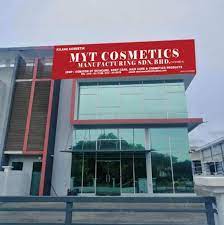
MYT Cosmetics operates an automated, ISO 22716 & GMPC-certified facility. Our production floor features vacuum emulsifying mixers ranging from 50L pilot batches to 2,000L mass-production vessels, ensuring seamless scalability for growing brands.
Definition of target skin benefits, pricing goals, and export region regulations.
Lab sample synthesis with active encapsulation & sensory optimization.
Preservative efficacy, stability screening, and client sample sign-off.
Compilation of PIF, CPSR, safety documentation, and CPNP/FDA filing.
Automated vacuum emulsification, N2-purged filling, and inline coding.
Palletization, customs clearing support, and international door-to-door freight.
Protect your retinol formulation with specialized light-blocking glass, airless pump dispensers, and premium retail box printing.
Get expert answers regarding MOQs, regulatory compliance, testing protocols, and contract manufacturing logistics.
Our standard Minimum Order Quantity (MOQ) for custom formulation OEM retinol serums is 3,000 units. For white-label stock formulations in standard packaging, MOQs start as low as 1,000 units. Contract packaging and custom bottle colors may alter MOQ parameters.
All formulations destined for the EU adhere strictly to Regulation (EC) No 1223/2009. We formulate within the 0.3% Retinol Equivalent limit, conduct mandatory Challenge Tests (ISO 11930), perform 3-month stability screenings, and provide a comprehensive CPSR compiled by certified European toxicologists.
We utilize liposomal encapsulation technology, incorporate synergistic antioxidant systems (Tocopherol + Ascorbyl Palmitate + Ferulic Acid), and execute filling under a continuous nitrogen blanket. Furthermore, we recommend UV-coated amber glass or airless pump containers.
Yes. Our R&D laboratory specializes in custom active matrices. Popular combinations include Retinol + Niacinamide, Retinol + Palmitoyl Tripeptide-5, and Retinol + Hyaluronic Acid + Ceramides. Our chemists ensure pH compatibility (pH 5.5 - 6.5) to maintain formula stability.
R&D sampling takes 5–7 business days. Upon formula approval and deposit payment, mass production and filling require approximately 25–35 days, including quality control release testing.
Absolutely. We provide pre-production samples for texture, scent, stability, and packaging compatibility testing. Contact our export sales engineering team to request sample kits.