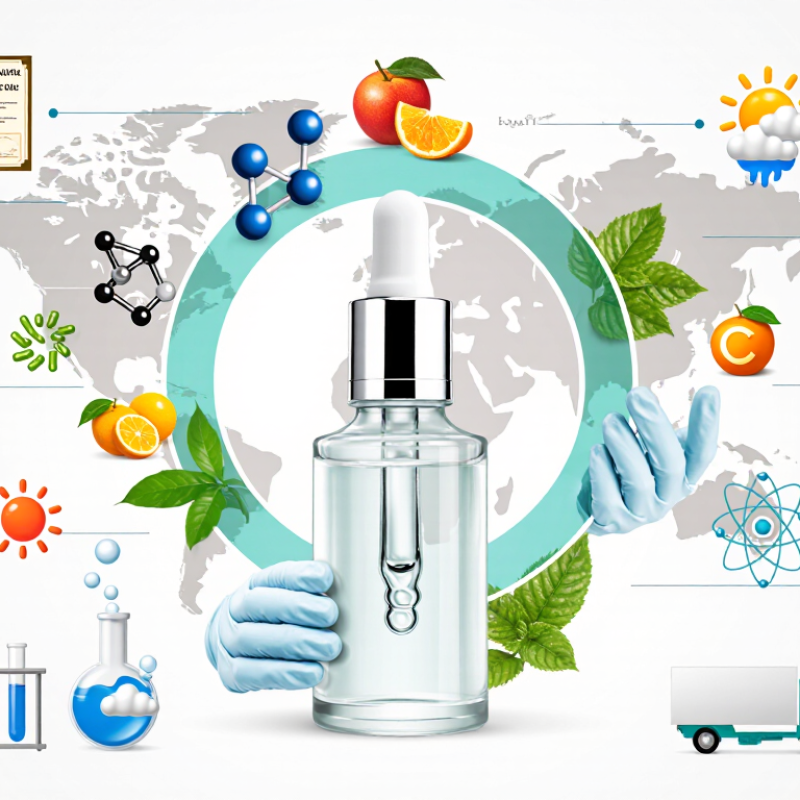
In 2026, global buyers will expect more than attractive packaging and familiar skincare claims. They will examine the science, safety, stability, and supply reliability behind every Face Serum Formulation. A modern serum may contain hyaluronic acid, niacinamide, vitamin C derivatives, peptides, botanical extracts, or barrier-supporting lipids. Each ingredient must serve a clear purpose.
Texture matters too. A lightweight serum should spread smoothly, absorb without excessive tackiness, and remain stable after repeated opening. Picture a clear dropper bottle stored in a warm bathroom, then shipped across changing climates. Heat, light, oxygen, and transport vibration can affect color, scent, viscosity, and performance. Proper compatibility testing is essential.
Global sourcing requires careful verification. Ingredient identity, purity, allergen information, certificates, microbial limits, and batch traceability should be reviewed with qualified laboratories and responsible suppliers. Regional rules also differ, so product claims, labeling, preservatives, and restricted ingredients must be checked for each target market. Professional review is not optional.
Still, no formulation is perfect. A serum that feels elegant in one climate may feel heavy elsewhere. A highly active formula may increase sensitivity for some users. This is where practical testing, consumer feedback, and transparent communication become valuable. Small pilot batches can reveal problems that laboratory theory misses.
The strongest 2026 formulation strategy combines cosmetic science with realistic market experience. It respects evidence, regulatory expectations, and user comfort. It also leaves room for improvement. That honesty supports safer decisions for brands, distributors, and buyers worldwide.
What defines a high-performance face serum formulation in 2026 is measurable skin support, not instant shine. McKinsey & Company estimates that global beauty revenue could reach about 580 billion dollars by 2027, with skincare remaining the largest category. This growth raises buyer expectations. A modern serum should combine humectants, barrier-supporting lipids, and well-studied actives at realistic concentrations. Niacinamide, glycerin, panthenol, ceramides, and stable vitamin C derivatives can support hydration, comfort, and tone improvement. However, ingredient lists alone prove little. Clinical testing, stability data, and controlled-use results matter more.
Texture also influences performance. A serum should spread evenly, absorb without excessive tack, and remain stable after opening. Airless or light-protective packaging can help protect sensitive ingredients. Circana reported continued growth in prestige skincare sales during 2023, showing that consumers still invest in products with credible benefits. Yet global buyers need more than attractive claims. They should review preservative testing, allergen controls, pH range, and compatibility with local cosmetic regulations. Not just glow.
Formulators should also design for different climates. A lightweight gel may suit humid regions, while dry markets may need richer barrier support. I would not call one formula universally perfect. That assumption deserves scrutiny. Some consumers may react to fragrance, botanical extracts, or high active levels. Clear labeling and realistic timelines build stronger trust than exaggerated promises. A high-performance serum is therefore a balance of evidence, sensory quality, safety, and honest communication.
What Defines a High-Performance Face Serum Formulation in 2026
High-performance face serums typically combine evidence-based actives with controlled concentration ranges, skin-compatible pH, strong stability, and clear global compliance documentation. The chart shows commonly used active concentration ranges for modern facial serum development; actual levels should be validated for compatibility, efficacy, safety, and regional regulations.
Indicative formulation ranges: niacinamide 2–5%, L-ascorbic acid 5–20%, sodium hyaluronate 0.1–1%, salicylic acid 0.5–2%, retinol 0.1–0.3%, and alpha-arbutin 0.5–2%. Concentration limits and labeling requirements may vary by market.
Advanced face serums depend on balanced ingredient systems, not impressive ingredient lists alone. Hyaluronic acid attracts water and helps create a cushioned skin feel. Different molecular weights can support surface hydration and a smoother finish. Niacinamide may help strengthen the skin barrier and improve the appearance of uneven tone. However, high levels can feel uncomfortable on sensitive skin.
Vitamin C derivatives offer antioxidant support and may brighten dull-looking skin over time. Their stability depends on pH, light exposure, oxygen, and packaging. Peptides can support a refined, firm-looking appearance, while ceramides and panthenol help comfort dry skin. A serum with retinoids requires greater caution, clear directions, and careful market-specific compliance. Results are rarely immediate.
From a formulation perspective, compatibility matters. An elegant serum should spread evenly, absorb without excessive tackiness, and remain stable through transport. Airless or opaque packaging can protect sensitive ingredients. Small batch testing can reveal separation, odor changes, or unexpected irritation. No formula is perfect. I would still question whether every active ingredient earns its place. Global buyers should review stability data, preservative performance, ingredient documentation, and consumer skin needs before scaling production. Sensory testing also matters; a technically strong serum may fail if users dislike its finish.
| Ingredient | Ingredient Category | Primary Cosmetic Function | Typical Use Level | Formulation Considerations | Recommended Skin Concerns | Global Buyer Relevance |
|---|---|---|---|---|---|---|
| Niacinamide | Vitamin B3 | Helps support the skin barrier, improves the appearance of uneven tone, and reduces the look of excess oil and enlarged pores. | 2–5% | Generally suitable for water-based serums. A final formula pH of approximately 5.0–7.0 is commonly used. Very high levels may increase the risk of flushing or discomfort for sensitive users. | Uneven tone, dullness, visible pores, oily or combination skin, weakened barrier. | Versatile, cost-efficient, and suitable for many consumer skin types and climate conditions. |
| L-Ascorbic Acid | Vitamin C | Provides antioxidant protection and helps improve the appearance of dull skin and uneven pigmentation. | 5–20% | Highly sensitive to oxygen, light, heat, and water exposure. Usually formulated at a low pH, often below 3.5. Opaque, air-restrictive packaging is strongly recommended. | Dullness, uneven tone, visible sun-related discoloration, loss of radiance. | Strong consumer recognition, but requires strict packaging, stability, and transport controls. |
| 3-O-Ethyl Ascorbic Acid | Vitamin C Derivative | Supports antioxidant and brightening positioning with generally better formulation stability than pure L-ascorbic acid. | 1–3% | Can be used in mildly acidic to near-neutral systems, depending on the supplier specification and complete formula. Protect from excessive heat and light. | Dullness, uneven tone, early visible signs of aging. | Useful for global products seeking a vitamin C claim with a more convenient formulation profile. |
| Hyaluronic Acid | Humectant Polymer | Attracts and helps retain water at the skin surface, improving the appearance of temporary dryness and fine dehydration lines. | 0.05–0.5% | Different molecular weights create different sensory and film-forming profiles. Add carefully to prevent lumping and excessive tackiness. Compatible with many water-based systems. | Dehydration, tightness, dry skin, temporary loss of surface smoothness. | Suitable for lightweight hydration serums and products designed for dry, humid, or air-conditioned environments. |
| Glycerin | Humectant | Draws water into the outer layers of the skin and improves the moisturizing feel of the formula. | 2–10% | Highly water-soluble and broadly compatible. Excessive use may create a sticky after-feel, particularly in hot and humid climates. | Dryness, dehydration, rough texture, compromised moisture feel. | Reliable, economical, and widely accepted across international markets. |
| Panthenol | Pro-Vitamin B5 | Acts as a humectant and skin-conditioning agent while helping improve the feel of dry or stressed skin. | 1–5% | Water-soluble and generally easy to incorporate. Suitable for daily-use formulas and often paired with barrier-supporting ingredients. | Dryness, sensitivity, tightness, rough texture, post-cleansing discomfort. | Useful for gentle, soothing, and family-oriented serum concepts. |
| Ceramides | Skin-Identical Lipid | Helps support the skin barrier and reduce the appearance of moisture loss when properly delivered in a compatible system. | 0.05–1% | Oil-dispersible and technically challenging in clear water serums. Requires suitable emulsification, dispersion, and processing conditions. Supplier-specific delivery systems may be needed. | Dryness, barrier weakness, sensitivity, roughness, mature skin. | Strong fit for barrier-repair positioning, especially in dry or cold-weather markets. |
| Squalane | Emollient | Softens the skin, reduces rough feel, and provides a lightweight, non-greasy emollient finish. | 2–15% | Oil-soluble and commonly used in anhydrous serums or emulsions. Select the appropriate dosage to balance slip, absorption, and packaging compatibility. | Dryness, roughness, sensitivity, mature skin, weakened barrier. | Offers a lightweight alternative to heavier oils and can support premium sensory positioning. |
| Azelaic Acid | Dicarboxylic Acid | Helps improve the appearance of uneven tone, blemish-prone skin, and redness-related visual concerns. | 5–10% | Low water solubility may cause crystallization or a non-clear appearance. Requires suitable solvents, suspension technology, or specialized delivery systems. | Blemish-prone skin, uneven tone, visible redness, post-blemish marks. | Suitable for multifunctional formulas, but texture and stability must be validated carefully. |
| Salicylic Acid | Beta Hydroxy Acid | Helps exfoliate the skin surface and supports the appearance of clearer pores and smoother texture. | 0.5–2% | Formulation pH, solubility, preservative performance, and regional cosmetic regulations must be checked. May be unsuitable for very sensitive or compromised skin. | Oily skin, blemishes, visible pores, rough or congested texture. | Popular in products for oily and blemish-prone skin; market-specific compliance review is essential. |
| Alpha-Arbutin | Skin-Tone Ingredient | Helps improve the appearance of uneven skin tone and dark spots when used consistently. | 0.5–2% | Water-soluble and generally used in mildly acidic to near-neutral formulas. Protect from excessive heat and verify stability during accelerated testing. | Uneven tone, dark spots, dullness, post-blemish discoloration. | Supports brightening concepts without requiring a highly acidic serum base. |
| Tranexamic Acid | Tone-Improving Active | Helps improve the visible appearance of uneven pigmentation and post-blemish marks. | 2–5% | Water-soluble and commonly used in water-based systems. Compatibility with acids, preservatives, and the final pH should be confirmed through stability testing. | Uneven tone, dark spots, post-blemish marks, dull appearance. | Well suited to targeted tone-care serums and combination active formulas. |
| Retinol | Vitamin A Derivative | Helps improve the appearance of fine lines, uneven texture, and visible signs of photoaging. | 0.1–0.5% | Sensitive to light, oxygen, and heat. Requires an appropriate delivery system, protective packaging, and controlled processing. Introduce gradually for consumer tolerance. | Fine lines, uneven texture, dullness, visible signs of aging. | High-performance positioning, but regulatory, stability, packaging, and consumer-use guidance require careful management. |
| Bakuchiol | Botanical-Derived Active | Provides an alternative anti-aging positioning and helps improve the appearance of uneven texture and fine lines. | 0.5–2% | Oil-soluble and usually incorporated into emulsions or oil serums. Protect from oxidation with suitable packaging and antioxidant support. | Fine lines, uneven texture, dullness, mature skin. | Useful for formulas seeking a retinol-alternative or plant-derived marketing direction. |
| Tocopherol | Vitamin E | Functions primarily as an oil-phase antioxidant and skin-conditioning ingredient. | 0.1–1% | Oil-soluble. Often used to help protect oils from oxidation, but it does not replace a complete preservative system in water-containing formulas. | Dryness, mature skin, formulas containing oxidation-sensitive oils. | Supports antioxidant and conditioning claims while improving the stability strategy of oil phases. |
| Ectoin | Osmolyte | Helps condition skin exposed to environmental stressors and supports a comfortable, hydrated skin feel. | 0.3–2% | Water-soluble and generally suitable for mild, fragrance-free, and sensitive-skin formulations. Confirm compatibility with the complete preservative and active system. | Dryness, sensitivity, environmental stress, discomfort, dehydration. | Supports advanced protective and urban-environment skincare concepts. |
| Green Tea Extract | Botanical Antioxidant | Provides antioxidant skin-conditioning benefits and supports a refreshed appearance. | 0.1–2% | Extract composition varies by supplier and solvent system. Color, odor, microbial quality, and light stability should be evaluated. | Dullness, environmental stress, oily or combination skin. | Offers a recognizable botanical story, but standardization and batch consistency are important for global supply. |
| Peptides | Signal or Carrier Peptide | Support anti-aging and skin-conditioning claims, depending on the specific peptide and its validated mechanism. | Supplier-specific | Use level, pH range, temperature tolerance, and compatibility vary considerably. Follow the supplier's technical documentation and validate the finished formula. | Fine lines, loss of firmness, dullness, mature skin. | Supports premium, targeted, and multifunctional serum concepts when claims are appropriately substantiated. |
| Allantoin | Skin Protectant | Helps soothe the feel of irritated skin and improves the sensory profile of formulas for sensitive skin. | 0.1–0.5% | Limited solubility may require controlled heating and proper processing. Avoid overloading the formula to reduce the risk of crystallization. | Sensitivity, roughness, dryness, post-cleansing discomfort. | Useful in gentle and barrier-supporting products for a broad consumer audience. |
| Sodium PCA | Natural Moisturizing Factor Component | Acts as a water-binding humectant and helps improve skin softness and hydration feel. | 0.5–5% | Water-soluble and suitable for clear water-based serums. Evaluate tackiness and salt compatibility when combined with polymers or high active loads. | Dehydration, dryness, rough texture, tightness. | Supports efficient hydration claims in lightweight, fast-absorbing serum formats. |
| Phenoxyethanol and Ethylhexylglycerin | Preservative System | Helps protect water-containing cosmetic products against microbial contamination during storage and normal use. | Typically up to 1% combined | Use must comply with the regulations of the target market. Preservative efficacy should be confirmed by microbiological challenge testing in the finished formula. | Product safety and shelf-life protection rather than a direct skin concern. | Important for globally distributed water-based serums, especially those packaged in multi-use containers. |
Developing a global-ready face serum starts with a clear user and market brief. Define skin concerns, climate exposure, texture preferences, and price expectations before selecting ingredients. I usually map target regions early, because hot humidity, dry winters, and shipping delays can change performance. Keep the formula purposeful. A short ingredient list is easier to explain, test, and document. Choose well-characterized materials with reliable specifications, safety data, and traceable suppliers. Each ingredient needs a reason to be there. That sounds obvious. It is often missed.
Build prototypes in small laboratory batches, then assess color, odor, viscosity, pH, and absorption. Record every adjustment. A serum that feels elegant in one climate may become sticky elsewhere. Run stability, compatibility, microbial, and preservative-efficacy testing through qualified facilities. Test the filled package, not only the bulk formula. Pumps, droppers, and seals can behave differently during heat, cold, vibration, and transport. I would not approve a launch from appearance alone. Human use testing can reveal pilling, irritation, or awkward dosing that laboratory checks miss.
Prepare region-specific labels, ingredient names, warnings, directions, and supporting files before production. Cosmetic rules and claim standards differ, so local regulatory review matters. Use claims that the evidence can support, such as “helps improve skin hydration,” rather than promising medical results. Translate for meaning, not word count. Ask independent reviewers to challenge the formula, documents, and consumer instructions. Some weaknesses will remain. The goal is to find them before buyers do, while keeping batch records, complaint handling, and ongoing quality checks active after launch.
Developing a face serum for global buyers starts with safety, not trend chasing. A qualified cosmetic formulator should review every ingredient, concentration, source, and intended skin area. Preservative selection must match water content, pH, packaging, and expected consumer use. A clear batch record supports traceability from raw material receipt to finished filling. Small details matter. Supplier documents should include specifications, allergen information, contaminant limits, and current safety data.
Stability testing should reflect real shipping conditions, including heat, cold, light exposure, and repeated opening. Check color, odor, texture, pH, viscosity, and microbial quality at defined intervals. Packaging compatibility also deserves attention; some active ingredients can interact with pumps, caps, or liners. Safety testing may include preservative efficacy, microbial analysis, and human skin compatibility assessments. No formula is perfect. Unexpected separation or irritation can still reveal weaknesses in the original design.
Global compliance is not one checklist. Requirements differ by market, including restricted ingredients, labeling language, responsible-person duties, product information files, and acceptable cosmetic claims. Claims such as “brightening” or “anti-aging” need evidence that matches the wording. Keep testing records, raw material certificates, and manufacturing controls organized.
Global buyers evaluate face serum formulations beyond attractive ingredient lists. They examine efficacy evidence, safety data, texture, packaging compatibility, and regional compliance. A promising serum should show clear ingredient concentrations and documented stability results. Buyers may request accelerated stability testing at different temperatures and humidity levels. Climate changes everything. Texture matters.
Customization usually begins with the target consumer and sales channel. Buyers compare water-based, oil-based, and emulsion systems for absorption, layering, and residue. They also review fragrance levels, allergen declarations, vegan requirements, and sensitive-skin suitability. Claims must match available evidence, not marketing ambition. “Brightening” may require different substantiation from “helps improve the appearance of uneven tone.” Packaging trials should include pumps, droppers, and airless containers because oxidation can affect sensitive actives.
One practical lesson is easy to overlook: a formula can perform well in the laboratory and disappoint during shipping. Heat exposure, freezing, vibration, and repeated opening deserve evaluation. Test it properly. Procurement teams should request full INCI documentation, microbial results, batch consistency records, and clear shelf-life support. Some customization requests also create trade-offs. More botanical extracts may increase complexity, color variation, or preservation challenges. The best formulation is not always the most crowded one; it is the one that remains safe, stable, understandable, and commercially realistic across intended markets.
It combines proven ingredients, safe concentrations, stable packaging, and realistic performance claims. Instant shine is not enough. Evidence matters more.
Glycerin and panthenol help attract and retain moisture. Ceramides support the skin barrier. Niacinamide and stable vitamin C derivatives may support tone improvement.
Ingredient names do not show concentration, stability, or compatibility. Clinical testing and controlled-use results provide stronger evidence. Marketing can look convincing.
Test samples under heat, cold, light, humidity, and repeated opening. Check color, odor, texture, pH, viscosity, and microbial quality regularly.
Airless pumps and light-protective containers can reduce air and light exposure. Test pumps, caps, and liners for compatibility. Packaging can still fail.
Lightweight gels may suit humid regions with high moisture. Drier climates may need richer barrier support and less evaporative texture. One formula cannot suit everyone.
Buyers should request full ingredient documentation, safety data, stability results, microbial testing, and batch records. Shelf-life support should be clear.
Match every claim with suitable evidence and approved wording. “Helps improve uneven tone” may be more accurate than a stronger promise. Recheck assumptions.
Fragrance, botanical extracts, and high active levels may cause discomfort for some users. Clear allergen labeling and skin compatibility testing reduce uncertainty. Reactions still happen.
In 2026, a high-performance Face Serum Formulation is defined by its ability to deliver visible benefits while remaining safe, stable, pleasant to use, and adaptable to different markets. Effective formulations combine carefully selected ingredients for hydration, barrier support, antioxidant protection, brightening, and skin renewal. Ingredient compatibility, suitable concentrations, elegant texture, fast absorption, and packaging protection are essential to preserving product quality and consumer confidence.
Developing a global-ready serum requires a structured process, including concept definition, ingredient screening, laboratory trials, stability assessment, safety evaluation, and user testing. Manufacturers must verify microbiological quality, pH, viscosity, shelf life, and packaging compatibility while preparing documentation for applicable regional regulations. Global buyers typically assess efficacy, transparency, scalability, sustainability, cost, and customization options. A strong formulation partner should be able to adjust texture, fragrance, active levels, packaging, and compliance documentation to meet the preferences and requirements of different target markets.